ZENITH INSIGHTS
A clearer view of the market.
Trading guides, market context and practical ideas.
Read less noise. Make better decisions.
Latest insights
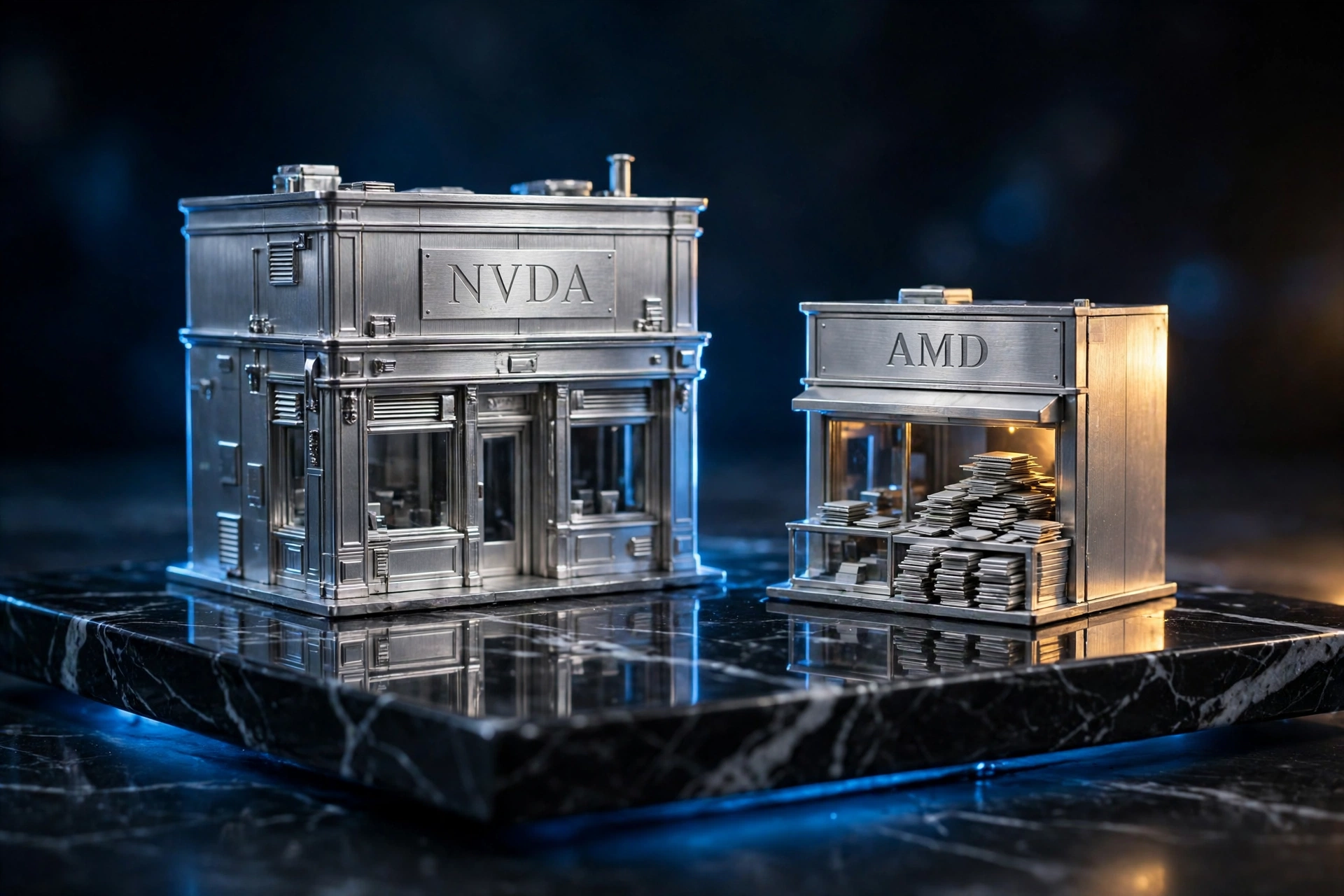
NVDA or AMD After the Fall? Which Dip Is Worth a Closer Look?
Both Nvidia and AMD fell hard on 5 November 2026. One is cheaper on earnings, the other is growing faster. A qualification-first check of each dip — direction, invalidation, target, reward/risk and loss budget — before buying either.
Read article
Everything Fell Together. Was Your Diversification Broken?
On 5 November 2026, all 11 S&P 500 sectors fell on the same day. Learn the difference between owning many things and being diversified, why correlations rise in a selloff, and how to check your own portfolio before you sell it.
Read article
The Stock Can Be Overpriced. Your Short Can Still Blow Up.
Why an overpriced AI stock can still be a dangerous short. Understand borrowing costs, squeezes, margin risk and the differences between shares, CFDs and puts.
Read articleMore Zenith Insights

AI Doesn’t Have to Fail for the Boom to Break
What could break the AI boom? Explore cash returns, falling prices, delivery delays and financing risks without confusing technology with stock returns.
Read article
Why the US Midterms Matter to Stocks Beyond Who Wins
How US midterms can affect taxes, spending, company profits and stock valuations, and why historical post-election rallies are no guarantee.
Read article
Your US Stock Rose 10%. Why Did You Make Only 4.5%?
A US stock gain can shrink when measured in SGD. Learn the stock-and-currency return calculation, cash exposure and the limits of currency hedging.
Read article
Intel Fell Nearly 30%. What Did the Market Stop Believing?
Intel fell 28.58% after its Q3 report. Examine weaker guidance, foundry economics and the expectations behind a turnaround before judging the lower price.
Read article
You Lowered Your Average Cost. Did You Lower Your Risk?
Averaging down lowers your entry price, but not your immediate dollar loss. See the arithmetic, added exposure and questions to ask before buying more.
Read article
The Index Recovered. Why Didn’t Your 3x ETF?
Why a 3x daily ETF can lose money even when its index recovers. Understand daily resets, compounding, costs and the questions to ask before trading.
Read article
Your Dividend Is Only Half the Story
A dividend is cash received, not automatically a profit. Understand ex-dividend dates, total return, yield traps and what funds a sustainable payout.
Read article
The Volume Bar Is Huge. Who Was Actually Buying?
A huge stock volume bar does not reveal who is buying. Learn to compare activity fairly, recognise auction effects and judge what price actually achieved.
Read article
Price Hit the Bollinger Band. Why Are You Trading Against It?
A Bollinger Band touch is not a trade signal. Learn when to follow a trend, fade a range, read a squeeze and test entries against realistic risk.
Read article
Your ETFs May Be Buying the Same Stocks Again
Different ETFs can hold the same stocks. Learn to calculate hidden exposure, distinguish overlap from correlation, and understand equal-weight tradeoffs.
Read article
Oracle Made $4.8 Billion. Why Was Free Cash Flow Negative?
Oracle earned billions while free cash flow was negative. Follow its actual cash, AI investment and customer prepayments to understand the difference.
Read article
Choose Your Strategy Before You Choose Your Weapon
Match shares, ETFs, CFDs, futures and options to your trading strategy, holding period and risk. A practical guide for day traders, swing traders and investors.
Read article
The Stock Went Up. Why Did My Call Option Lose Money?
Why a call option can lose money while its stock rises, and how time, volatility and debit spreads change a swing trade.
Read article
A Cheap Stock Can Be Expensive to Trade.
Why small, large and mega caps move differently, what bid–ask spreads cost, and what to check before buying a stock.
Read article
The Company Bought Back Billions. Did You Actually Benefit?
Buyback billions can hide dilution or overpayment. Learn to check share counts, EPS, cash costs and the value left for continuing shareholders.
Read article
Why Stock Splits Can Be Good for Stocks
Stock splits can widen retail access and make options positions more practical. Explore when those benefits matter, and why they do not guarantee higher returns.
Read article
Who Gets Paid When Drones Take Off?
Who benefits from the drone business? Explore AVAV, KTOS, RCAT and DroneShield, and why contract headlines need a closer look.
Read article
Happy Birthday! The Bull Market Turned 4 Years Old.
The S&P 500 bull market turned four. Here's why its age isn't a trading signal, and what traders should check before putting money at risk.
Read article
Tesla Made the Car Jump. Should You Jump Into TSLA?
Tesla’s Roadster reveal is exciting. But should that change your trade? A simple lesson on reading TSLA news without letting excitement replace your plan.
Read article
Forex vs Stocks: You’re Trading a Relationship, Not a Business
Two lifts can rise together while one falls behind. In forex, choose both sides of the comparison and manage the common exposure behind your trades.
Read article
How to Read Japanese Candlesticks Without Inventing a Story
A candlestick shows the score, not the whole match. Separate price facts, interpretations and trading decisions before trusting a chart story.
Read article
How to Calculate Position Size: Why Trading One Lot Isn’t a Risk Plan
One lot is a quantity, not a risk plan. Let the setup determine the stop and your cash-risk budget determine the size.
Read article
Index Trading vs Stock Trading: Are You Trading the Market—or Trying to Beat It?
Trade the market basket or select an individual company? Choose the movement your process can capture, then manage the product and position risk.
Read article
How to Reduce Your Trading Risk: Can Prop Trading Protect Your Own Money?
Prop trading can reduce the personal capital you commit. It cannot replace a tested strategy, a total fee budget or proper risk management.
Read article
Does the US President Control the Federal Reserve? Influence Isn’t the Same as Control
Political pressure is not a policy decision. Separate presidential preferences, Fed action and the market’s response before taking a trade.
Read article
Best Stock Analysis Tools: What You Actually Need—and What Just Adds Noise
Give every tool a job. Start with screening, focused charts and honest records, then add platforms only when they solve a real bottleneck.
Read article
Why Your Trading Strategy Never Works—You Keep Changing the Rules
You cannot judge a recipe you never bake twice. Write repeatable rules, track your execution, and change the strategy when the evidence gives you a reason.
Read article
Where Should You Set Your Stop-Loss? Most Traders Start With the Wrong Question
A normal hit is not the end of the fight. Define where the setup fails, then size the position so that failure stays affordable.
Read article
Why Some Traders Make Money—and Others Lose With the Same Setup
Same setup. Different outcomes. Compare what your wins earn, what your losses cost, and whether your execution preserves the strategy’s edge.
Read article
AI Won’t Fix Your Trading. It Can Help You Work Smarter.
Think like the farmer who learned to use the ox. Let AI reduce repetitive work, then measure whether it improves your trading process.
Read article
Why Most Traders Use Support and Resistance Wrong
Find the obvious intersection, then watch the reaction. Shared attention makes a level worth studying; it does not guarantee a bounce.
Read article
Do Stock Gaps Always Fill? A Better Way to Trade What Happens Next
A gap is a record, not a promise. Watch whether traders accept the new price, define what proves you wrong, and assess the reward against the risk.
Read article
If Buy and Hold Beats Most Traders, Why Trade at All?
Compare your trading with a simple index investment after costs, drawdowns, and time. Extra decisions need evidence that they add value.
Read article
Relative Strength in Trading: What Does RS −14% Actually Tell You?
A negative RS reading means a stock lagged SPY. Check its own return, the direction of the gap, and the setup before committing capital.
Read article
Liquidity Sweeps and Stop Hunts: Is the Market Really Out to Get You?
Obvious levels attract clustered orders. A brief break and reversal is observable; the intention behind every order is not.
Read article
The 10-Year Treasury Yield Is Rising. Why Should Stock Traders Care?
A rising Treasury yield gives investors a more attractive alternative. Stocks must offer enough growth and reward to justify the added risk.
Read article
Will AI Replace Traders? If Trading Bots Print Money, Why Are They for Sale?
Automation can execute rules without hesitation. It cannot prove those rules will survive costs, losses, and changing market conditions.
Read article
Why a Stock Can Go Nowhere for Weeks—Then Move 20% in Days
A quiet stock is not doing nothing. It is showing where buyers and sellers disagree, and where a change in demand must prove itself.
Read article
Do Moving Averages Work? Yes—Until the Market Stops Trending
A rising average can organise a trend. A flat average crossed repeatedly is a warning that the market is ranging, not a reason to trade every signal.
Read article
What Is the Most Important Thing in Trading? Risk Management.
Many discipline problems begin with oversized risk. Define invalidation first, size the position second, and make an ordinary loss one your plan can survive.
Read article
Trend Trading: Why I Missed META’s Rally While the Market Struggled
META’s rally shows why market weakness calls for selectivity, not blindness—and why a trend still needs a defined entry, invalidation, and point where the opportunity has passed.
Read article
Does Fibonacci Retracement Work—or Are Traders Just Drawing Levels After the Move?
Fibonacci can organise a pullback, but its levels must prove they improve decisions beyond visible price structure and random reference zones.
Read article
Your Job as a Trader Is Not to Predict—It Is to React
A trading plan maps entries, invalidation, position size, exits, and no-trade conditions before price and emotion take over.
Read article
Do Trendlines Work? The Truth About Trendline Trading
Trendlines do not make price bounce. They become useful only when drawing rules, triggers, invalidation, and risk are consistent enough to test.
Read article
Why Small Account Trading Challenges Are Gambling in Disguise
A small account can teach discipline. An extreme target and short deadline pressure traders to replace process with leverage, urgency and risk of ruin.
Read article
Why Reading Financial News Won’t Make You a Better Trader
Know the event calendar and read material changes, but let price reaction and your rules decide whether a trade exists.
Read article
Is Day Trading Worth It? Why Most Retail Traders Should Think Twice
Fast trades create fast feedback, but short horizons magnify execution costs, emotional pressure, and every weakness in an unproven edge.
Read article
Why Stock Prices Fall Hard—Then Bounce Back to All-Time Highs
A violent decline can reset expectations and positioning. A lasting recovery still needs fresh demand, improving evidence, and follow-through.
Read article
Steps to Build a Powerful Trading Playbook
Turn your best setups into visual rules, measurable evidence, and a repeatable process for qualification, risk, execution, review, and scaling.
Read article
The Stock Market Is a Poker Table—Do You Know Who You’re Playing Against?
Every participant has different incentives, timeframes, and constraints. Read the pressure, recognise trapped traders, and know when to fold.
Read article
Fed Rate Hike Is Almost Certain. So What Happens to Stocks Now?
A quarter-point increase is widely expected. The tradable surprise lies in the Fed's next-rate signal and how different balance sheets respond.
Read article
Secrets Hedge Funds Are Hiding From Retail Traders
The useful institutional advantage is not a magic indicator. It is a disciplined system for controlling risk, exposure, execution, and mistakes.
Read article
8 Trading Truths Nobody Tells Beginners
Winning can reward bad decisions, tight stops can still carry large risk, and consistency means repeating a sound process rather than making money every day.
Read article
What Is Inflation? How CPI Affects Stocks and Financial Markets
Inflation changes purchasing power. CPI moves markets when it changes expectations for interest rates, yields, and financial conditions.
Read article
How to Become a Better Trader: Improve Your Decisions, Not Your Predictions
A profitable trade can come from a bad decision. Better trading starts with a repeatable process for selection, risk, execution, and review.
Read article
AAPL Stock After the iPhone Duo Launch: Is Apple’s Foldable Growth Already Priced In?
Apple’s foldable creates a new price ceiling. The question is whether it can add enough new profit to matter to a $4.6 trillion company.
Read article
What Are Interest Rates? The Price That Controls Almost Everything
Rates shape borrowing, bonds, housing, stocks, and risk appetite. The reason they move matters as much as the decision itself.
Read article
What Is Trade Invalidation? (It’s Not the Same as a Stop Loss)
Invalidation tells you when the thesis is dead. The stop is how capital leaves when that condition is hit.
Read article
Trading vs Investing: One Builds on Time. The Other Depends on Timing.
The same stock can demand two different decisions. The difference is the thesis, timeframe, and invalidation.
Read article
How to Run Your Trading Like a Business
A trading account becomes an operation only when its edge, capital, rules, records, and reviews are clearly defined.
Read article
Tesla Stock Forecast: Is Cybercab Already Priced Into TSLA at $354?
TSLA’s valuation depends less on today’s car business than on the probability of an autonomous platform emerging.
Read article
What Market State Means in Trading: Compression, Transition, and Expansion
Compression, Transition, and Expansion require different rules for putting capital to work.
Read article
FOCUS Is Not a Signal Service: How a Setup Earns Capital
A setup earns capital only after Market State, Structure, Momentum, and Risk align.
Read article
Why Lower Timeframe Trading Is Like Formula 1—Not a Beginner’s Shortcut
A faster chart does not make trading simpler. It demands better preparation, execution, and cost control.
Read article
TradingView Screener vs Finviz: Which Is Better for Swing Trading?
The better screener is the one that helps you narrow the market into a useful, repeatable shortlist.
Read article
Why Warren Buffett Wins While Most Traders Lose—And What Swing Traders Can Learn From Him
Swing traders should not copy Buffett’s holding period. They should copy his discipline about what deserves action.
Read article
How to Tell If a Breakout Is Real: Don’t Watch the Break—Watch What Happens Next
Do not judge a breakout by the candle that crosses the line. Watch whether price can live on the other side.
Read article
How Long Should You Hold a Swing Trade? Until One of These 3 Things Happens
Do not let the calendar, fear, or hope decide your exit. Let the trade plan do the work.
Read article
What Is Market Structure in Trading? It’s Simply Who Is Winning
Higher highs, lower lows, and sideways ranges are just ways to see who is winning the fight for price.
Read article
How to Find Stocks to Trade Every Day Without Scanning Hundreds of Charts
Stop hunting every moving chart. Filter for the few stocks that actually deserve your capital.
Read article
My Friend Knows Everything About The Market. Except How To Make Money From It.
Market knowledge is useful, but it only matters when it becomes a repeatable decision process.
Read article
“It’s Too High to Buy” Is One of the Most Expensive Mistakes Traders Make
All-time highs are not automatically too late. Sometimes they show just how badly buyers want the stock.
Read article
Trading Is Like Sex. If You Have To Force It, It's Probably Not The Right Setup.
When desperation takes over, mediocre charts start looking attractive. Wait for the conditions to be right.
Read article
Casinos Understand Risk Better Than Most Traders
The house wins by accepting losses, managing exposure, and trusting a repeatable edge over many bets.
Read article
Donald Trump's $100,000 Wall Street Controversy Reveals What A Trading Edge Really Is
The Truth API controversy shows why information alone is not the edge. What traders do with it matters more.
Read article
Prop Trading Doesn't Test Your Trading Skills. It Tests Your Discipline.
Prop challenges expose whether traders can follow rules, manage risk, and execute under pressure.
Read article
Why Most Traders Completely Misunderstand The Fed
Interest rates are not buy or sell signals. They are context, and traders still need a disciplined process.
Read article
Fundamental Analysis vs Technical Analysis: Which One Is Better?
Fundamentals answer what. Technicals answer when. Better trading requires turning both into a decision.
Read article
The Best Traders Lose More Than You Think
Winning every trade was never the goal. The real edge is knowing how to lose well.
Read article
The Market Doesn’t Care How Many Indicators You Use
More signals do not create edge. A repeatable process does.
Read article
Support & Resistance Are Not Buy and Sell Signals
Support and resistance are reference points — not automatic buy and sell buttons.
Read article
Why “Buy Low, Sell High” Is One of the Most Misunderstood Trading Advice Ever
Low doesn’t mean cheap. Here’s why falling knives aren’t bargains — and what to ask instead.
Read article
Why Do Stocks Fall Even After Beating Earnings?
Earnings don’t move stocks. People do. Here’s why the market’s reaction matters more than the headline.
Read article
Stock Screener vs Stock Scanner: What’s the Difference?
Both help you find stocks. Neither tells you whether a stock is worth buying.
Read article
How Do You Know When to Sell a Stock?
Don’t sell because you’re nervous. Sell when the reason you bought has changed.
Read article
How Do You Know If a Stock Is Worth Buying?
Nobody can give you certainty. Here’s how experienced traders build conviction from evidence.
Read article
TradingView XAUUSD: Is TradingView the Best Way to Analyze Gold?
TradingView is excellent for Gold charts. A great chart still doesn’t make the decision for you.
Read article
TradingView Stock Screener Is Great. Until You Have to Make a Decision.
It filters 10,000 stocks in seconds. It can’t tell you which one deserves your capital.
Read article
What Does the Relative Strength Index (RSI) Really Mean?
Knowing the definition doesn’t make you a better trader. Here’s what RSI actually measures.
Read article
Market Screeners Are Broken. Here’s Why.
Finding stocks isn’t hard anymore. Making better decisions is.
Read articleNo articles match your search. Try a different topic or keyword.
ZENITH CLARITY
Read the setup.
Before you risk capital.
Enter a stock ticker to see its direction, structure, momentum and market state.